By The Rio Times | Created at 2026-10-03 16:46:44 | Updated at 2026-10-03 18:08:24
1 hour ago
By The Rio Times | Created at 2026-10-03 16:46:44 | Updated at 2026-10-03 18:08:24
1 hour ago
One-stop reference
Company Intelligence
Every listed company in Latin America — financials, ownership and structure for 1,450+ companies across 26 exchanges, in one place.
ENERGY · VENEZUELA
Key Facts
- —The country Venezuela, governed by acting president Delcy Rodríguez, rations electricity across much of its interior. Corpoelec, the state power company, runs the national grid.
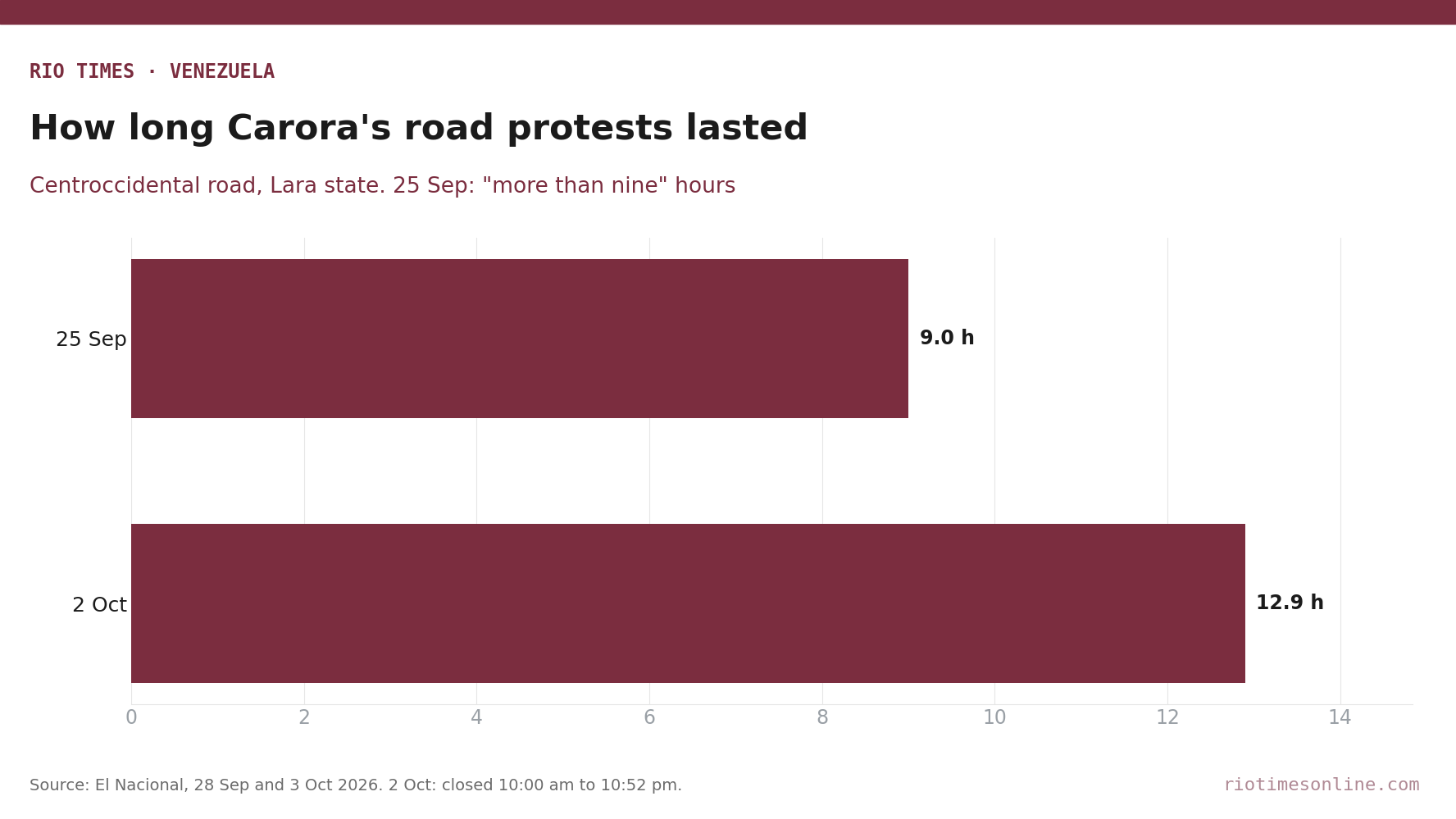
- —What happened On Friday 2 October residents of Carora, Lara state, blocked the Centroccidental road for nearly 13 hours. A stone-throwing clash with stranded drivers ended it at 10:52 pm, El Nacional reported.
- —Who is involved Residents of Torres municipality and Corpoelec, which signed a deal with them on 28 September. In Falcón state, residents blocked the Morón-Coro road the same day, La Patilla reported.
- —What it means for you Expect sudden closures on roads linking central and western Venezuela. Daily cuts in Torres again exceed 8 to 10 hours, El Nacional reported on 2 October.
- —Still open Whether Corpoelec honours the 28 September deal, whether new generating units arrive on time, and how security forces handle further roadblocks.
Venezuela blackout protests closed two main highways on Friday 2 October, and one ended in violence. In Carora, Lara state, residents blocked the Centroccidental road for nearly 13 hours, El Nacional reported.
The blockade ended at 10:52 pm after stranded drivers and protesters threw stones at each other. Hours earlier, residents in Falcón state had shut the Morón-Coro road over the same failures, La Patilla reported.
A deal that lasted one week
The Carora protest began at 10 am, when residents of several districts laid barricades of branches across the road. They said an agreement signed on 28 September had not been kept.
That deal followed an earlier closure on Friday 25 September, which stopped traffic for more than nine hours. Corpoelec and the local prefect, Ronal Sánchez, promised fairer daytime rationing and steady supply for ten districts.
Before the deal, residents had complained of unplanned cuts lasting up to 18 hours. By 2 October cuts again exceeded 8 to 10 hours a day, stopping water pumps and hurting shops, El Nacional reported.
A follow-up meeting at Corpoelec’s local office that Friday morning brought no technical answers, residents said. The roadblock went up straight afterwards.
Follow this story
Get an email when there’s news on Venezuela
Free. One email a day at most, and only when there is news. This also signs you up to our weekday newsletter, The LatAm Brief. Nothing arrives until you click the confirmation link, and you can stop either with one click. Privacy policy.
How the Lara blockade turned violent
The Centroccidental road links Lara with Zulia state and the oil city of Maracaibo. By evening the queue stretched for kilometres, trapping lorries, farm deliveries and intercity buses.
“We are not to blame for what happens with the power,” one driver heading from Barquisimeto to Maracaibo told El Nacional. He said protesters should go to the governor’s office or the town hall instead.
After 10:30 pm, drivers and passengers on the far side demanded that the road reopen. Arguments turned into an exchange of stones between the two groups.
Fearing that someone could be killed, the protesters lifted the barricade at 10:52 pm. The newspaper did not report injuries or arrests.
Falcón coast joins the roadblocks
In Falcón, residents of Silva municipality blocked the Morón-Coro road at Boca de Aroa on Friday. They used tyres, stones and branches to protest constant failures around the beach town of Tucacas.
At 6:30 pm, residents of Puerto Cumarebo blocked the same road further west over water shortages and power. Security officers came to mediate, and protesters said they would continue until they got answers, La Patilla reported.
The roadblocks are part of a wider wave of Venezuela blackout protests. The Venezuelan Observatory of Social Conflict counted 536 protests over power cuts between January and August, Tal Cual reported on 3 October.
Since 22 September night protests have spread through Zulia, Mérida, Aragua, Cojedes, Lara, Guárico and Portuguesa states. Police have dispersed some of them with tear gas, the outlet added.
What the government promises
Peak demand is about 15,000 megawatts against 12,000 to 13,000 available, according to figures cited by Tal Cual. El Nacional puts the national power deficit above 3,000 megawatts.
Corpoelec says new units will add 1,300 megawatts, alongside transmission and substation work. In Zulia, officials said on 1 October that a new Termozulia turbine was due on the grid within 72 hours.
Corpoelec president Juan Crisóstomo Fernández warned on 25 September that closing the gap will take time. Delivery times for some spare parts exceed a year, he said.
The opposition is pressing too. On 2 October the party Primero Justicia proposed abolishing Corpoelec and returning power to regional companies.
What Is Not Yet Known
The Carora clash rests on El Nacional’s account from the scene; no second report of the violence was found by Saturday. It is not known whether anyone was hurt or detained.
Corpoelec and the Lara authorities had not commented publicly on the blockade by Saturday. It is also unclear when rationing in western Venezuela will ease.
Sources: El Nacional (3 Oct); El Nacional (2 Oct); El Nacional (28 Sep); Tal Cual (3 Oct); La Patilla (2 Oct).
This article was produced by The Rio Times’ automated newsroom system. How we use AI · Report an error · Editorial responsibility: Matthias Camenzind, Editor-in-Chief
The Rio Times · Power Map
See who really holds power in Latin America
Click to open the Power Map →