By The Rio Times | Created at 2026-06-23 16:36:43 | Updated at 2026-06-23 17:53:26
1 hour ago
By The Rio Times | Created at 2026-06-23 16:36:43 | Updated at 2026-06-23 17:53:26
1 hour ago
Markets · Argentina · Corporates
— Key Facts
—The deal. YPF, Argentina’s state-controlled oil major, has signed an agreement to put McDonald’s outlets inside its service stations, with new openings planned across the country.
—The partner. The counterparty is Arcos Dorados, the world’s largest McDonald’s franchisee, which runs the brand’s 231 restaurants in Argentina.
—The scale. YPF controls roughly 60% of Argentina’s petrol and diesel sales and runs about 1,700 service stations nationwide.
—Why retail. Shops and food inside the stations already earn YPF around $500 million a year, at fatter margins than selling fuel.
—Beyond burgers. The drive runs alongside talks with pharmacy chain Farmacity and a plan, after winning a bank licence, to launch a YPF credit card with Mastercard.
—The read. A company global investors prize for its Vaca Muerta oil is deliberately building a domestic cash engine that does not rise and fall with the crude price.
The YPF McDonald deal turns Argentina’s biggest fuel retailer into something closer to a chain of roadside shopping stops, as the state oil company pushes to earn money from drivers long after they have filled the tank.
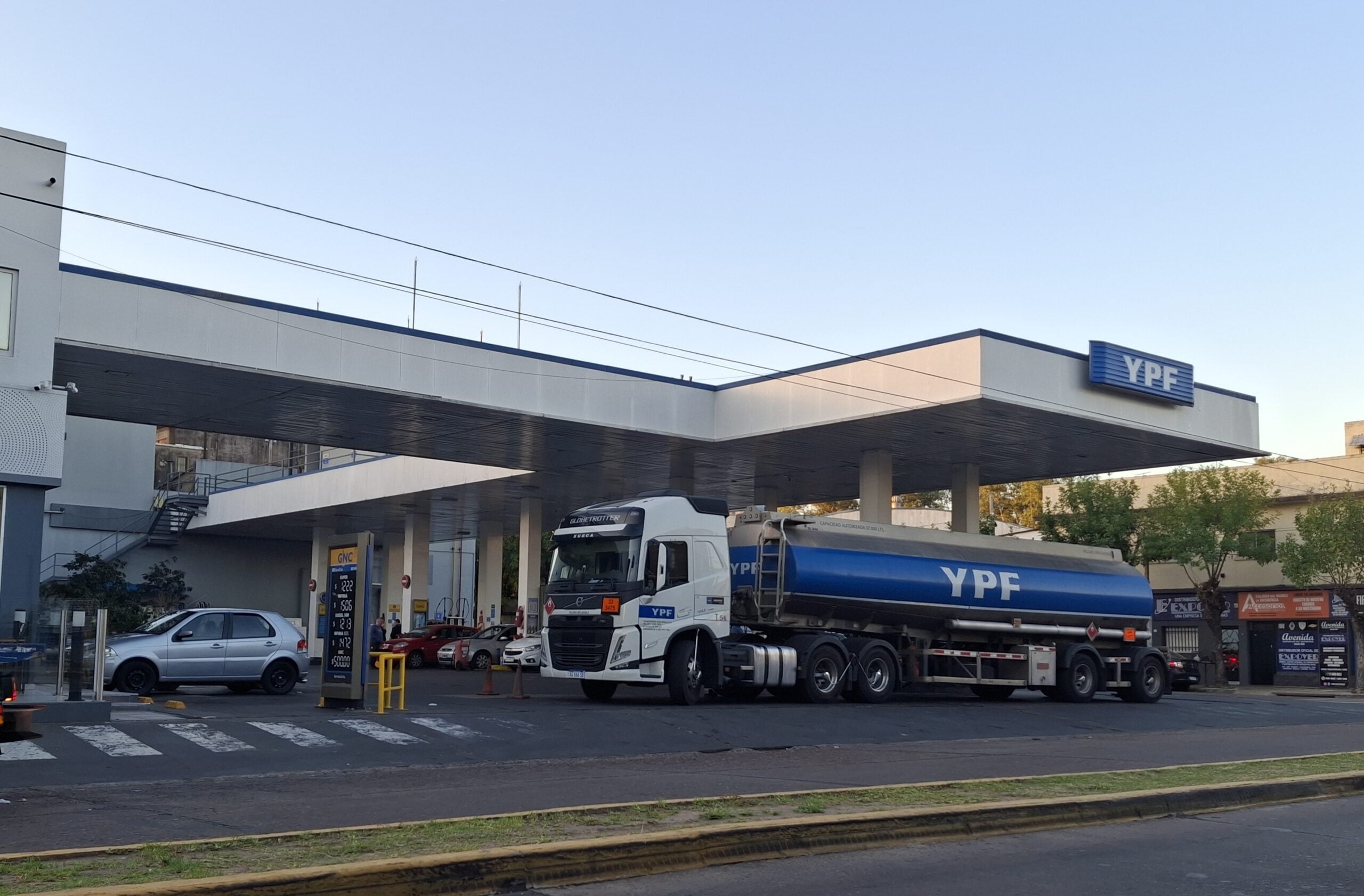 A YPF service station in Buenos Aires; McDonald’s outlets are set to move inside the network. (Photo: Wikimedia Commons)
YPF, the oil company most foreign investors know as the engine behind Argentina’s vast Vaca Muerta shale fields, has just made a move that has nothing to do with drilling. It has signed a deal to bring McDonald’s inside its service stations and plans to open more outlets across the country.
The agreement is with Arcos Dorados, the company that holds the McDonald’s licence in Argentina and is the chain’s biggest franchisee anywhere in the world. It already runs 231 McDonald’s restaurants in the country.
For a foreign reader, the simplest way to picture it is a familiar one. The petrol station that sells you fuel now wants to sell you lunch, your pharmacy items and, before long, the credit card you pay with.
Why the YPF McDonald tie-up makes business sense
The logic is margin. Petrol and diesel are commodities, near-identical from one pump to the next, so the fight for customers has shifted off the forecourt and into the shop.
That shop business is already large. Stores and food inside YPF stations bring in about $500 million a year, and they do it at higher margins than fuel itself.
YPF has the footprint to scale it. The company controls roughly 60% of Argentina’s petrol and diesel sales and operates about 1,700 stations, a reach no rival can match.
Chief executive Horacio Marín has split that network into tiers. Premium “YPF Black” sites in busy urban areas get the brand-name food, a traditional tier sits in the middle, and a low-cost format serves remote, thinner-margin regions.
The idea, in the company’s words, is the “destination station”: a place people stop at for a meal or an errand, not just because the tank is empty. The model is already common across the United States and Europe, and Argentina is now importing it.
YPF is not alone in the chase. Rivals including Axion, the Shell-branded network and the chain owned by Pan American Energy have all leaned into forecourt food and tie-ups with local brands to pull shoppers in.
The shift tracks a change in how Argentines use the stops. YPF already sells more coffee than any single café chain in the country, a sign that the shop, not the pump, increasingly sets a station apart.
An oil major that wants to be a shop and a bank
The fast food is only one piece. YPF is in advanced talks to stock products from Farmacity, a large pharmacy chain, and has floated adding an empanada brand, turning the bigger sites into something like a mini shopping centre.
The most ambitious leg is financial. Having secured a banking licence, YPF plans to launch its own credit card with Mastercard and eventually take deposits, putting it in direct competition with digital-wallet players such as Mercado Libre and Ualá.
For an outside investor, that is the real signal. YPF trades on the New York market and is valued largely on the promise of Vaca Muerta, where it has pledged about $6 billion of spending this year as the crude price slides toward the $60s.
Building a steady, fee-and-margin business in food, pharmacy and payments hedges that bet. It gives the company a stream of domestic cash that does not swing with every move in the oil tape.
The timing sharpens the point. In the same week the index provider MSCI again refused to upgrade Argentina from its lowest market tier, denying its big stocks an automatic wave of foreign money, YPF was busy widening the part of its business it can control at home.
Live Company IntelligenceSigns McDonald’s Deal to Turn Argentina’s Gas Stations Into Shops — the full investor dossierInside: live share price, peer benchmarks and the latest Rio Times coverage on the company.Rio Times · Live Ticker Intelligence
Signs McDonald’s Deal to Turn Argentina’s Gas Stations Into Shops
YPF · Buenos Aires
Share price · live
R$74,100
▼ -1.85% today
Frequently Asked Questions
What is the YPF McDonald agreement?
It is a signed deal for Argentina’s state-controlled oil company YPF to place McDonald’s outlets inside its service stations. The partner is Arcos Dorados, the chain’s largest franchisee worldwide, and YPF plans new openings across its network.
Why is an oil company selling burgers?
Shops and food inside its stations already earn YPF about $500 million a year, at higher margins than fuel. With petrol nearly identical from pump to pump, the company is competing for customers through retail rather than at the forecourt.
What does the YPF McDonald move mean for investors?
It signals a deliberate push to build domestic income that does not depend on the crude price, alongside pharmacy and banking plans. For a stock valued on its Vaca Muerta shale, that retail cash flow is a hedge against oil-price swings.
The Rio Times · Power Map
See who really holds power in Latin America
Click to open the Power Map →